Category: Innovators / Technology
SEO Title: Larry Page, Sergey Brin, and the Story Behind Google
Meta Description: Discover how Larry Page and Sergey Brin turned a Stanford research project into Google and transformed how the world finds information.
As the internet expanded in the 1990s, finding useful information became increasingly difficult. Search engines existed, but the rapidly growing web created a new problem: how could a system decide which pages were actually important?
A Research Problem at Stanford
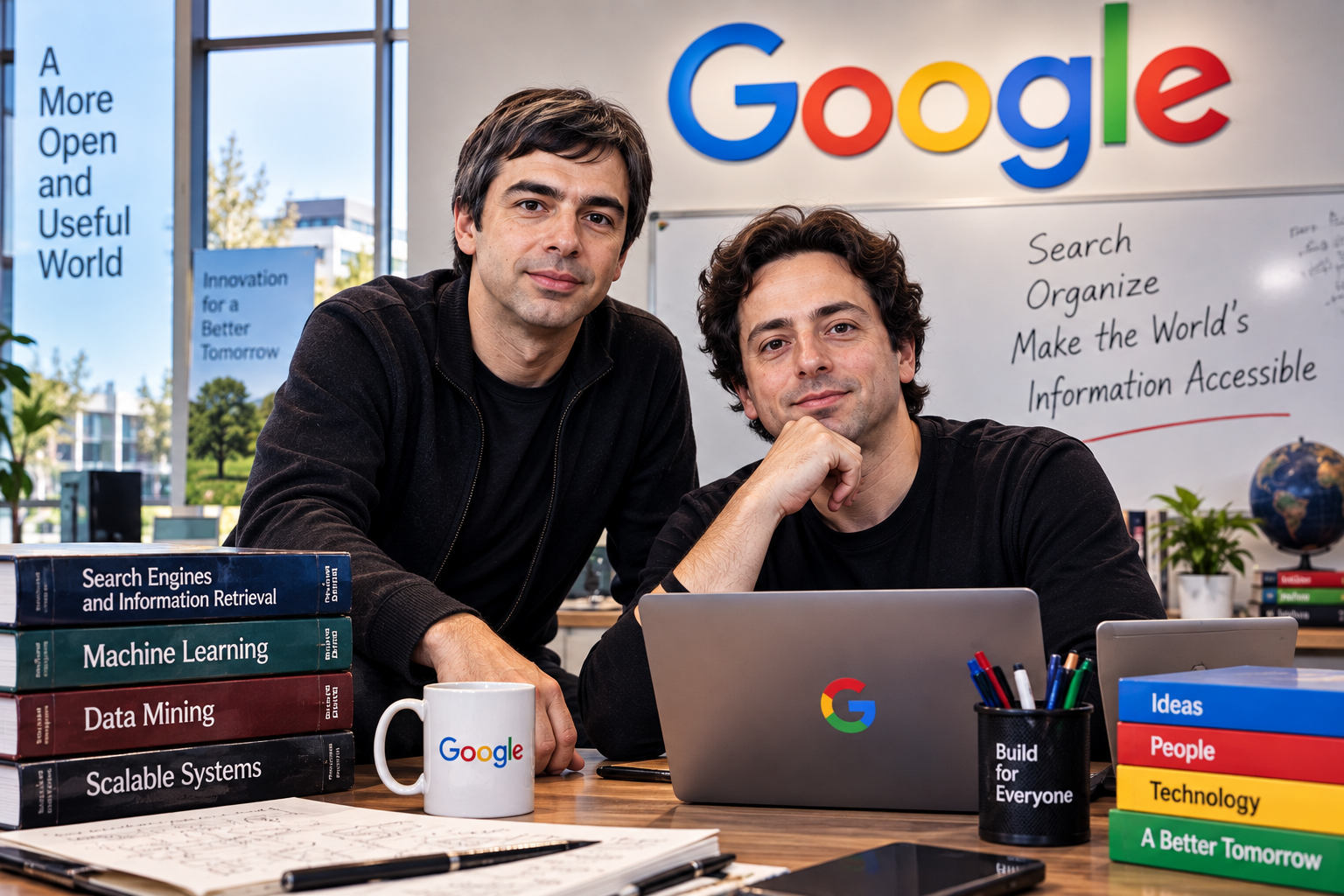
Larry Page and Sergey Brin met at Stanford University and began working on ideas related to organizing information on the web. Their research examined links between web pages and explored how those relationships might help rank results.
The idea eventually became the foundation for a search engine that prioritized relevance in a new way.
From Project to Company
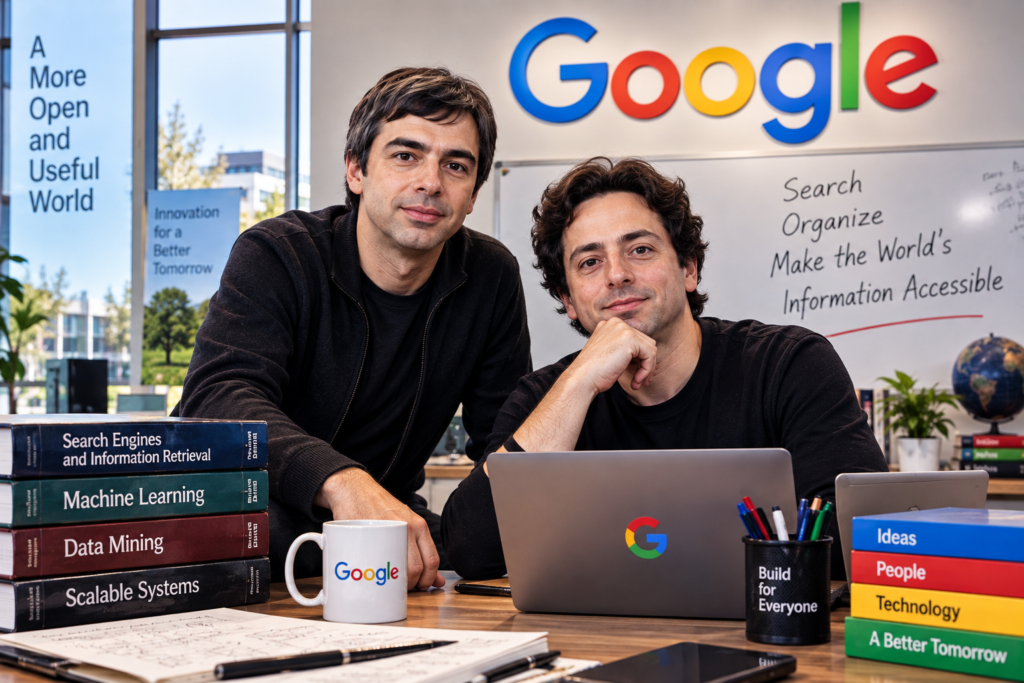
The project grew beyond the university environment as more people began using the search engine. Google was founded as a company and started expanding its infrastructure to keep up with increasing demand.
Its simple interface helped distinguish it from many busy web portals of the era. But the real strength was under the surface: the system was designed to return useful results quickly.
Expanding Beyond Search
Over time, Google expanded into advertising, email, maps, video, mobile software, cloud computing, and many other areas. Search remained at the center of its identity, but the company grew into a much broader technology ecosystem.
The Story Behind the Success
Google’s origin is a powerful example of how a focused research question can become a global business. Page and Brin did not begin by trying to create one of the world’s largest companies. They began by trying to solve a difficult information problem.
The lesson is simple: when a technical problem reflects a massive human need, solving it well can create opportunities far beyond the original idea.